Alumna Caroline Wilson publishes Op-Ed re Mid-Century Modernism in Charleston newspaper
Caroline Wilson (M.F.A. 2021) published an op-ed, “Commentary: College Lodge offers a chance to preserve disappearing 20th-century history” in The Post and Courier newspaper, Jan. 9 2024. The building was originally a Downtowner Motel, like the one in Savannah that is now SCAD’s O-House dormitory. Wilson is the president of MidModSC, a group dedicated to advocating for the appreciation of mid-century modernist architecture in South Carolina.
SCAD’s Architectural History department has a great showing at the annual SESAH conference
Nice article on the SCADworks blog about our department’s successful showing at the annual meeting of the Southeast Chapter of the Society of Architectural Historians (SESAH) in Little Rock, Arkansas, on September 27-30.
Chair Robin Williams honored for 30 years at SCAD

Robin B. Williams, Ph.D., celebrated his 30th anniversary of joining SCAD last month and 27 years serving as the chair of the Architectural History department. Following the completion of his dissertation at the University of Pennsylvania, Williams initially joined SCAD’s Art History department as their modern architectural historian. During his third year at SCAD he was invited to create a new program in Architectural History, which began in fall 1996 with the addition of two faculty — David Gobel, Ph.D., and Karl Schuler, Ph.D. Williams has served as chair ever since, overseeing the growth of the department to nine full-time and now one retired faculty. He is very proud that no faculty hired by the department has left over the 27 years.
New Architectural History faculty at SCAD


The Architectural History department is proud to see the addition of two new faculty. The retirement of Karl Schuler, Ph.D., as a full-time faculty allowed the department to add Brunella Angeli (Ph.D., Politechnico di Milano), who specializes in modern architecture and theory and joined the department in fall 2022. In October 2022 she delivered an inaugural public talk to introduce her to the SCAD community focusing on her dissertation subject — the architecture of world’s fairs. This fall, we expanded to nine full-time faculty to help deliver history classes to the growing number of students at SCAD and especially the growing ranks of Building Arts students. Kelly Ritter (Ph.D., University of Virginia) specializes in South and East Asian architecture, as well as modern visual culture. Last month she delivered her inaugural public talk likewise drawing on her dissertation — popular visual representations of modern Shanghai.

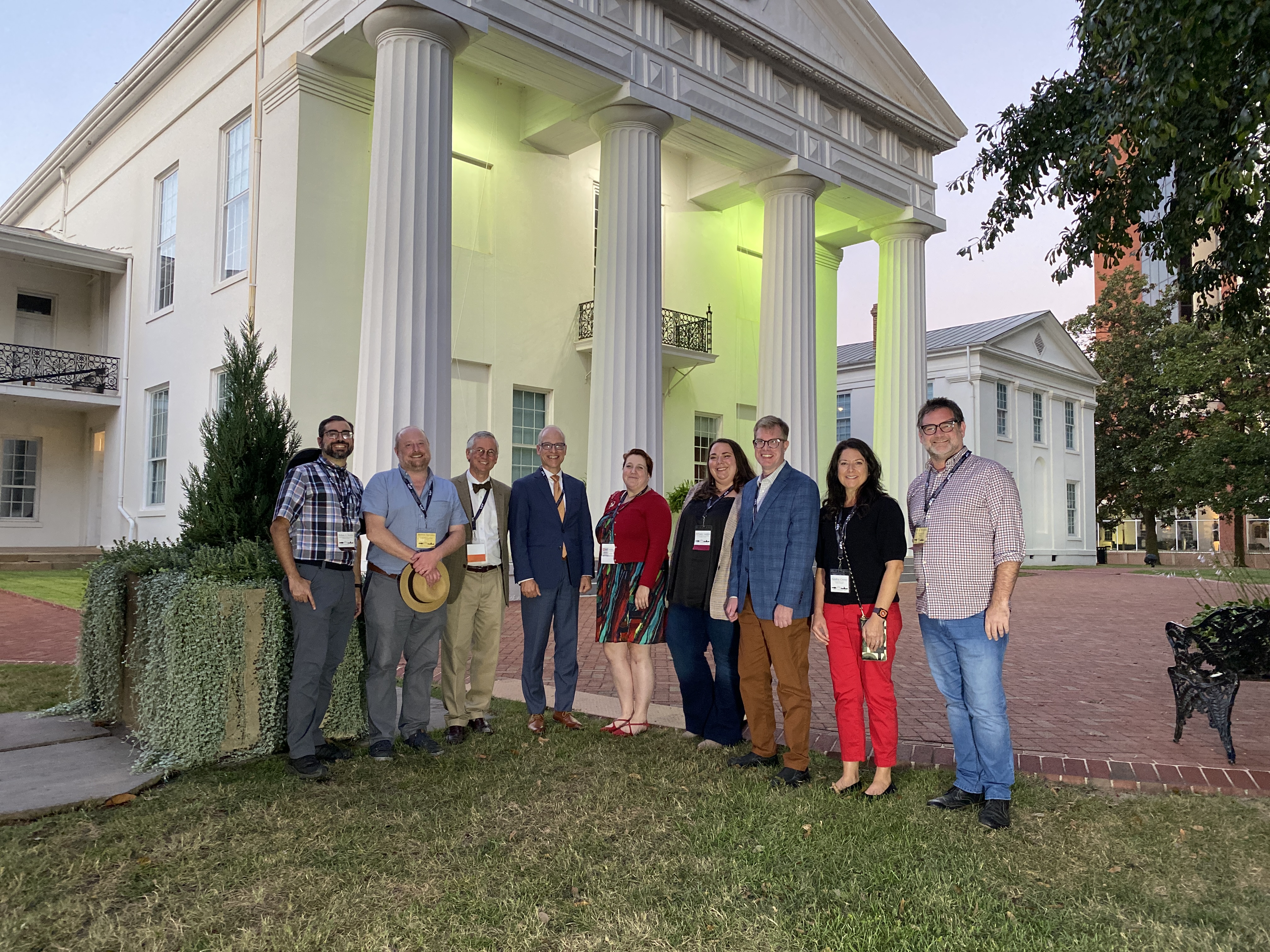
Multiple faculty, alumni and one current graduate student from our Architectural History program attended the annual meeting of the Southeast Chapter of the Society of Architectural Historians (SESAH) held in Memphis last week. Professors David Gobel and Patrick Haughey delivered papers, while Chair Robin Williams moderated a paper session. Additionally, Professor Gobel attended the SESAH Board meeting in his role as chair of the Arris journal editorial committee. Williams was involved this year as a member of the Awards Committee. Five alumni attended, with three — Robin Miller (BFA 2022), Glen Umberger (MFA 2015) and Nathaniel Walker (MA 2006) presenting papers. Alumnus Ruben Acosta (MFA 2010) serves on the SESAH Board representing Florida (missing from the photo). And alumna Elizabeth Clappin (2016) attended and showed her support of her former classmates. Current graduate student Bethany Laskin (MFA candidate) also presented a paper. SCAD was also represented by Art History and Cinema Studies professor Chad Newsome.
 Architectural History alumna Katie Fitzhugh (M.F.A. 2020) has been working at the Wormsloe State Historic Site near Savannah for over a year, beginning while completing her thesis, which focused on the site. As a ranger at the state park, she focuses on public education. In October she helped organize a scavenger hunt for “Noble Bones,” a witty play on the original owner of the plantation, Noble Jones. An article about the event in the Savannah Morning News, “Where’s Noble Bones? Wormsloe State Historic Sites hosts bone-chilling scavenger hunts in October,” interviewed her and included her in the photo.
Professor Gobel leads department’s fourth SCADextra workshop

Professor David Gobel led the architectural history department’s fourth SCADextra workshop, which offers students supplemental learning opportunities in the context of virtual classrooms. His workshop focused on “An Architectural History Ghost Tour: Exploring Savannah’s Lost Town Common” and included both a PowerPoint presentation and pre-recorded clips of himself out in the city as part of his live Zoom broadcast on Friday, October 23.
Professor Haughey leads third departmental SCADextra workshop

Professor Patrick Haughey led the department’s third SCADextra workshop on October 16. Focusing on “Seeing through Drawing: Rethinking Architecture, the City and History,” he analyzed the waterfront area through a combination of first-hand observation and informal analytical drawing, including a cross section through the Cluskey Vaults, the Bull Street Ramp, Factors Walk and a warehouse.
Karl Schuler delivers department’s second SCADextra workshop

Professor Karl Schuler delivered the department’s second SCADextra workshop, focusing on Historic Building Materials, on October 9. His workshop addressed different kinds of wood, stone, brick and metal, discussed their physical properties and explained how those properties lent themselves to different architectural uses. The SCADextra workshops are part of SCAD’s effort to offer students extended learning opportunities to supplement classroom experiences and are especially valuable in the context of the pandemic.

As part of SCAD’s response to the ongoing pandemic, each academic department has enlisted faculty to lead “SCADextra” live hour-long workshops broadcast via Zoom and available as a recording. Chair Robin Williams led our first workshop with a live tour of the area around Madison Square in downtown Savannah. His tour, Learning from Savannah, analyzed key urban and architectural characteristics of the city, focusing on examples of “elastic urbanism” — a concept he and fellow departmental faculty member David Gobel are exploring in a book they are authoring on Savannah’s urban and architectural history. The tour was an experiment in broadcasting live via Zoom, including some challenges with the sound recording.
MFA student Caroline Wilson delivered a paper, “In Pursuit of Health and Pleasure: Architecture and Society at Nineteenth-Century American Spa Resorts,” at the annual meeting of the Southeast Chapter of Architectural Historians, held virtually via Zoom on Friday, October 2. Here paper was part of a session focusing on “Attracting Tourists Through Design” and was one of three papers. Her pre-recorded presentation involved a PowerPoint presentation with her narration, followed by a live Q and A. This is the new normal for academic conferences!
Architectural History student club to host a panel discussion “Rethinking Commemoration”
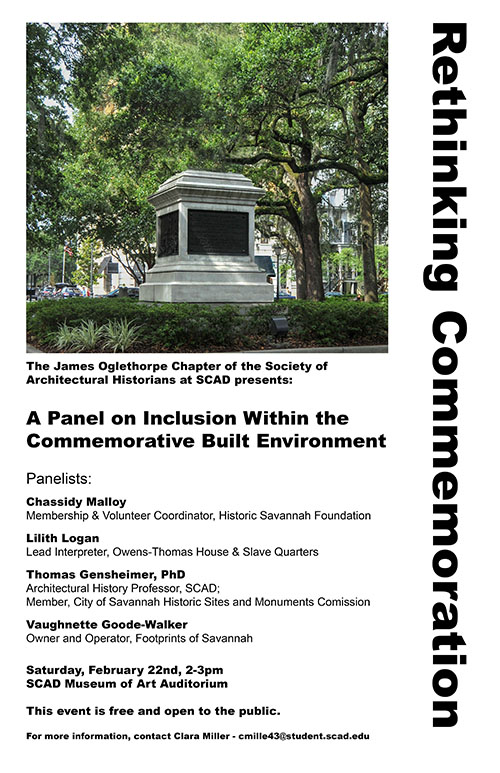
The James Oglethorpe Chapter of the Society of Architectural Historians, SCAD’s Architectural History student club, has organized a public panel entitled “Rethinking Commemoration,” taking place Saturday, February 22, 2:00-3:00 p.m. at the SCAD Museum of Art Auditorium. Spearheaded by Clara Miller (BFA candidate) and club vice-president, the event addresses the lack of diversity in the Savannah’s revered and controversial commemorative landscape. Historic preservation and architectural history panelists — Thomas Gensheimer, Ph.D., SCAD and City of Savannah’s Historic Sites and Monuments Commission; Vaughnette Goode-Walker, Footprints of Savannah; Lilith Logan, Owens-Thomas House and Slave Quarters; and Chassidy Malloy, Historic Savannah Foundation — discuss how public support and the private reinterpretation of history are impacting public remembrance and reframing historical narratives in Savannah.
2018-2019 Career data now posted
The semi-annual review of full-time positions advertised for architectural history in the public and private sectors (and excluding academic positions), representing the period of July 2018 through June 2019, have been posted to the Careers section (see tab above). Compiled by faculty members Karl Schuler and Tom Gensheimer, the most recent data show some interesting trends:
- the number of advertised positions nationally remains steady, showing a strong upward trend
- positions in architectural research and evaluation in particular continue their long-term trend of dominating opportunities
- the geographic distribution of jobs shows the Southeast continuing to offer the most opportunities
- salaries remain steady, with a general increase in all categories
Professor Guichard profiled in SCAD District publication
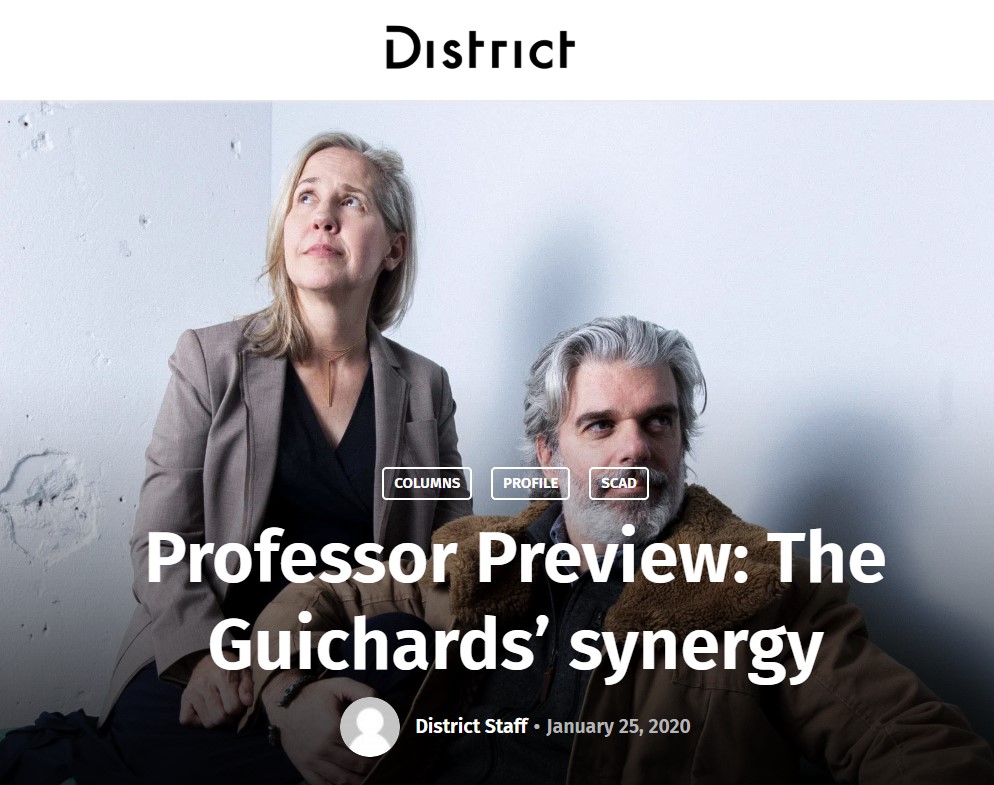 Architectural History professor Celeste Guichard was profiled, along with her husband, SCAD Interactive Design and Game Development professor, Cyril Guichard, in an article in the SCAD student publication District.
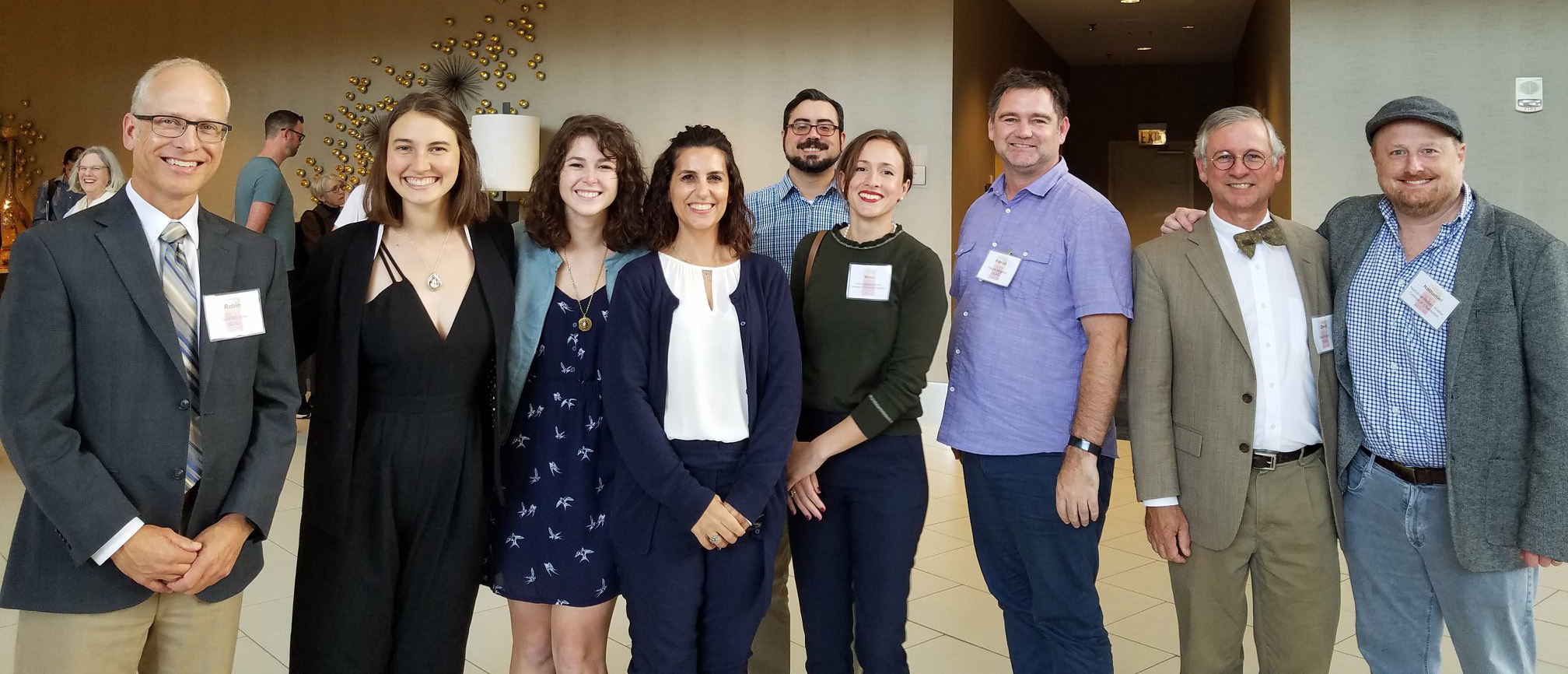 SCAD Architectural History students, alumni and faculty had their best ever showing at this year’s annual meeting of the Southeast Chapter of the Society of Architectural Historians (SESAH) held in Greenville, SC, October 10-12, 2019. Undergraduate Clara Miller and graduate students Monica Gann and Madi Alspector, alumni Nathaniel Walker (MA 2006) and Marisa Gomez Nordyke (BFA 2007) and Professors David Gobel, Patrick Haughey and Robin Williams all presented papers. Alumnus Ruben Acosta (MFA 2010), while not presenting a paper, is now part of the SESAH executive as Membership Coordinator.
At the end of October, Undergraduate Clara Miller and graduate student Monica Gann, along with Professors Patrick Haughey and Robin Williams all presented papers at the Society for American City and Regional Planning History (SACRPH) biennial national conference in Arlington, Virginia.
The students’ achievements were profiled in another SCADworks blog post.
Graduate student Madi Alspector profiled in SCADworks blog article
Architectural history graduate student Madi Alspector enjoyed some well-deserved attention in being profiled in an article on the SCADworks blog. Madi has been active translating her research papers from her classes into conference presentations, serving as a roll model for her classmates who have begun following suit.

SCAD students and faculty from a variety of Building Arts majors assembled on a Saturday morning in early October to hear three Architectural History students and three of the department’s faculty present rehearsals of their conference papers to be presented at the annual meeting of the Southeast Chapter of the Society of Architectural Historians (SESAH), the most significant regional conference for architectural historians, which took place a week later in Greenville, SC. Graduate students Monica Gann (pictured below) and Madi Alspector and undergraduate Clara Miller presented, along with architectural history faculty David Gobel, Patrick Haughey and Robin Williams. The “Peer Practice Session” aims to provide students — both those presenting and those in attendance — with an opportunity to see how conference papers are crafted and how feedback from a rehearsal can dramatically improve the presentation, the delivery, the visuals, the argument, etc.

Williams publishes article as part of the online exhibition “People-Works: The Labor of Transport”.
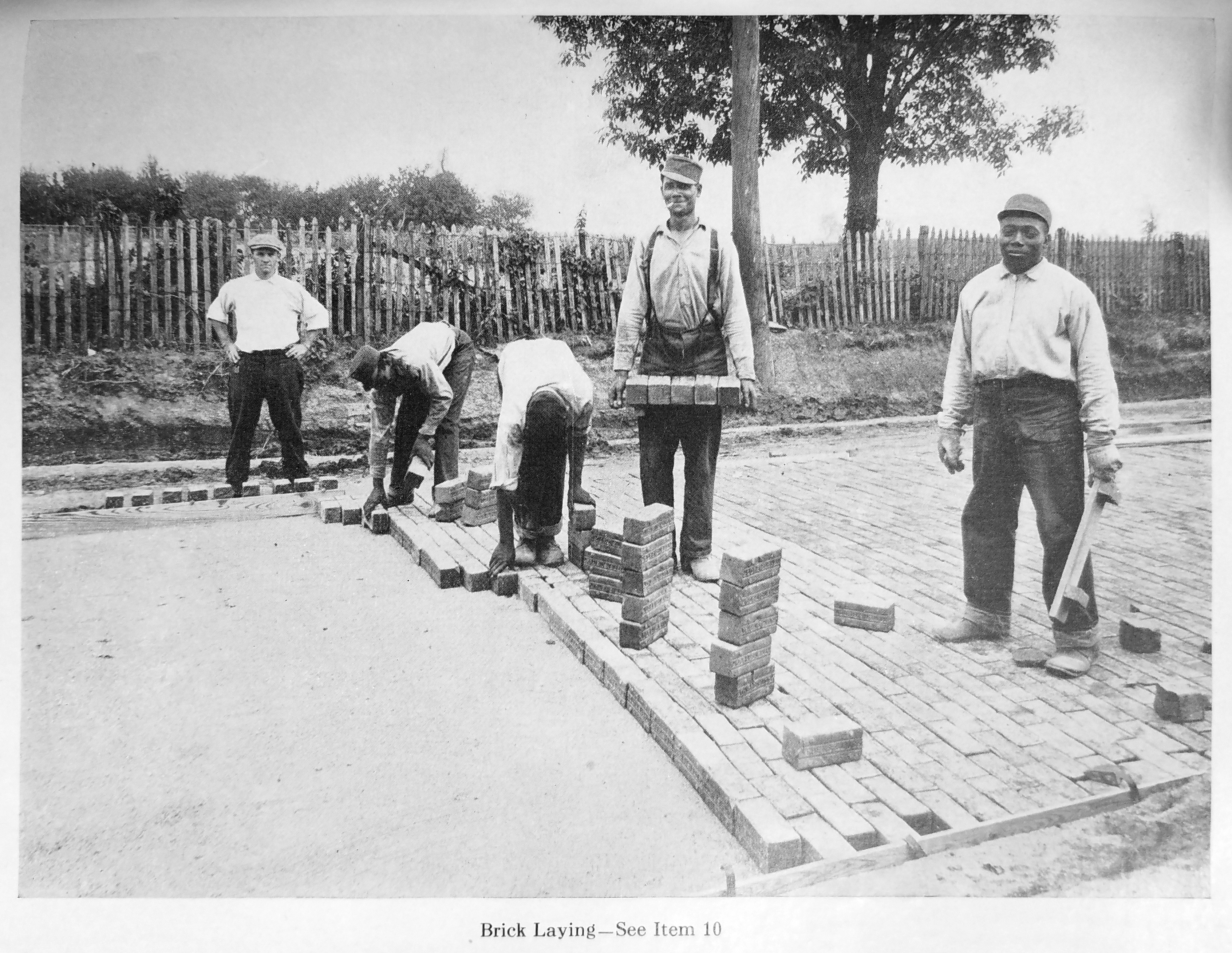 Department chair Robin Williams recently saw the publication of his peer-reviewed article, “Hand-Made Streets: The Role Of Labor In Making, Installing And Maintaining Street Pavement Prior To The Dominance Of Asphalt,” as part of the online exhibition People-Works: The Labor of Transport. The exhibition is hosted on the T2M Mobility in Transportation blog and involves six articles and an introduction by the exhibition’s curator and editor, Kate McDonald.
Buildings of Savannah wins best guidebook award

 The Buildings of Savannah, authored by department faculty Robin Williams, David Gobel, Patrick Haughey, Daves Rossell and Karl Schuler and published in 2016 by the University of Virginia Press, has received an Award of Excellence as the Best Guidebook from the Southeast Chapter of the Society of Architectural Historians (SESAH) at their annual meeting on October 5. Prof. David Gobel was on hand to receive the award on behalf of the whole team.
New career data for 2017-2018 posted, with opportunities remaining steady
The semi-annual review of full-time positions advertised for architectural history in the public and private sectors (and excluding academic positions), representing the period of July 2017 through June 2018, have been posted to the Careers section (see tab above). Compiled by faculty member Karl Schuler, the most recent data show some interesting trends:
- the number of advertised positions nationally remains steady, showing a very slight upward trend
- positions in architectural research and evaluation in particular continue their long-term trend of dominating opportunities
- the geographic distribution of jobs shows the Southeast continuing to offer the most opportunities, with the West continuing its position as the region showing the most growth
- salaries remain steady, with positions requiring a Master’s degree and about three years’ experience showing the most dramatic increase


 Exploring the Built Environment